Well Pump Repair in Tompkins County, NY
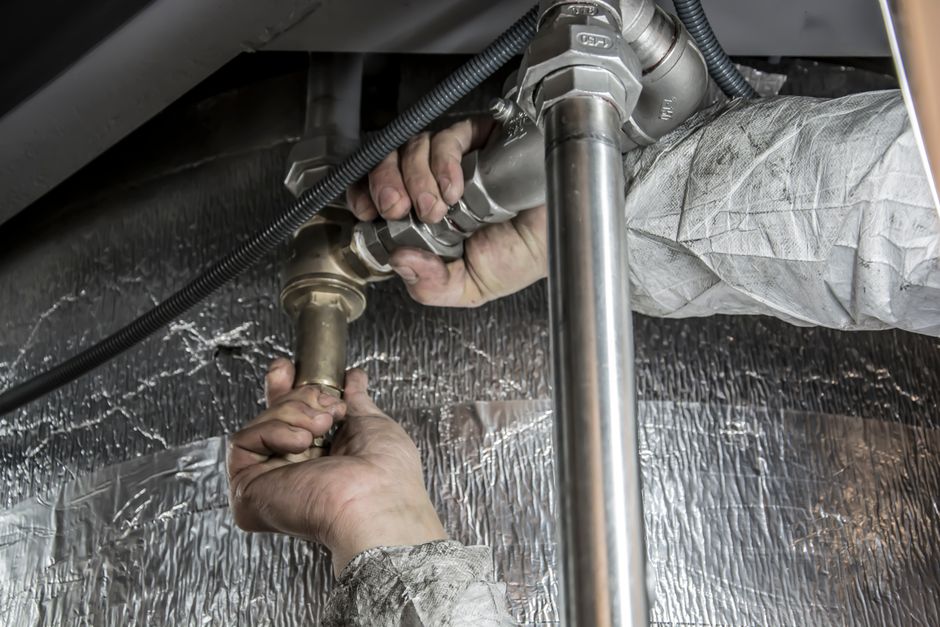
Most of Tompkins County outside the City of Ithaca runs on private wells, which means the pump, tank, and switch sitting in a basement or well house are doing a job a municipal water system handles for everyone else. When one of those parts starts to fail, there's no utility to call and no meter reading to check — just whatever the system is telling you through pressure, sound, and how often the pump is running. Four components can each fail on their own — the pump, the tank, the switch, and the wiring connecting them — and a symptom that looks like "the pump is dying" is just as often a $30 part somewhere else in the chain.
Ithaca Well Pump Repair takes your description of what the system is doing and routes it to service built around that specific problem, rather than guessing from a checklist. Call (914) 530-6133 or request a quote to get started.
Reading your system before you call
Four checks take a few minutes and tell a real story about what's failing:
- The breaker. One trip with nothing else unusual could be nothing. A breaker that trips again as soon as you reset it is the pump or the wiring, not a coincidence.
- The sound. Total silence when the pump should run, cycling far more often than usual, or a hum/click/grind you haven't heard before are three different problems — covered below.
- The gauge, if the system has one. A number well under normal, or one that keeps sliding down rather than holding, points upstream of the tank.
- The timeline. A recent outage, a panel upgrade, a new appliance — anything that changed right before the problem started is worth mentioning, because it can point straight at the cause.
Sorting pump problems from tank and switch problems
The three components work together, which is exactly why it's easy to blame the wrong one. Pressure that fades gradually, or a pump that seems to run constantly at reduced output, tends to be the pump itself. Pressure that swings, or a pump that fires on and off every few seconds, tends to be the tank or the switch — most often a tank that's lost its air charge and can no longer buffer demand, less often a switch that's stopped signaling shutoff correctly. Neither rule is airtight, which is the actual argument for getting a real look rather than replacing parts on a guess.
No water, all at once. A system that goes from fine to nothing, with no lead-up, usually traces to one of: the pump failed outright, the switch stopped telling it to run, a wire connection failed, or power never reached the pump for reasons that have nothing to do with the pump — a breaker, a fuse, a wider outage. Our no-water and low-pressure page and no-water checklist both start from this same fork.
Fast, repeated cycling. The pump kicking on and off every few seconds — sometimes with no water running anywhere in the house — is almost always the tank, not the pump. Our short-cycling article covers why a waterlogged tank forces the pump to do work the tank is supposed to absorb.
Humming, clicking, grinding. Humming without flow usually means the pump can't prime or is fighting a restriction. Rapid clicking is typically the switch, not the pump — see short-cycling above. Grinding is the outlier that actually is usually the pump: a failing motor or worn bearing, and not a sound that resolves itself.
A breaker that keeps tripping. This means the motor is pulling more current than it should — often a sign it's failing internally — or there's a wiring fault in the circuit. Resetting it repeatedly doesn't fix either cause; it just delays a problem that's getting worse each time.
Repair, replace, or just watch it?
A pump that's losing pressure gradually will often keep running for a while, so there's usually no need to stop using water immediately. But a system already under stress — weak pressure, frequent cycling, a breaker that's already tripped once — is more likely to fail completely and at a worse moment than if it had been looked at earlier. Running a struggling pump doesn't address the cause, either; in some cases (a motor running hot) it actively shortens what's left of its life.
Whether the fix is a repair or a replacement comes down to what's actually broken, not the pump's age. A switch, a control box, or a length of wiring is usually a straightforward swap. A motor that's genuinely failed isn't something rebuilt in place on a residential well — at that point replacement is the more sensible route on cost and on how long the fix actually lasts. See our repair-vs-replace guide for the specific signals that tip one way or the other.
There's no honest flat price to quote here, because cost tracks well depth (a deeper well means more line and labor to pull and reset a pump), whether the failure is isolated to a switch or short wiring run versus the pump itself, and how easy the wellhead is to access. What keeps cost down is catching a tank or switch problem before it takes the pump down with it, and reasonable access to the well.
Does submersible vs. jet pump change anything?
Most of the newer, deeper wells near Cayuga Lake — Lansing, the lower Town of Ithaca — run submersible pumps set inside the casing. Older systems and some of the shallower hill-town wells still have jet pumps sitting above the well, in a basement or well house. Because one requires pulling the whole unit to inspect and the other doesn't, knowing which type you have changes how a repair visit actually goes; see submersible and jet pumps to figure out which one is yours.
Requesting service
Tell us what the system is doing — no water, weak pressure, an unfamiliar sound, a tripping breaker — plus your town and any scheduling constraints. That description routes the request to service built around your actual problem rather than a blind dispatch.
New York requires anyone doing well pump work to register annually with DEC, and DEC's Water Well Contractor Search Tool lets you check before hiring — worth doing regardless of who you call. More in our DEC registration article.
If you're evaluating a well system as part of buying a home rather than fixing one you already own, that's a different job — see buying a home on a private well in Tompkins County and our real estate well and pump testing service.
Related service pages
Well pump replacement · submersible and jet pumps · pressure tanks · pressure switches · no-water and low-pressure troubleshooting · winter freeze-ups · well drilling · water treatment and filtration · sump pumps · real estate well and pump testing.
Related reading
Dealing with a well pump problem? Call (914) 530-6133 or get a quote.